
Conceptual Design: Huycks Bay Road
Status: On-going
Location: Prince Edward County
Design + Build: JAM Design Workshop
This project represents the design phase of a landscape before it is built. The focus is on clarity and intention. How the garden is organized, how it will be experienced, and how planting is used to shape the space over time. The work shown here reflects the second iteration of the concept, developed through revision and refinement as the design evolved.
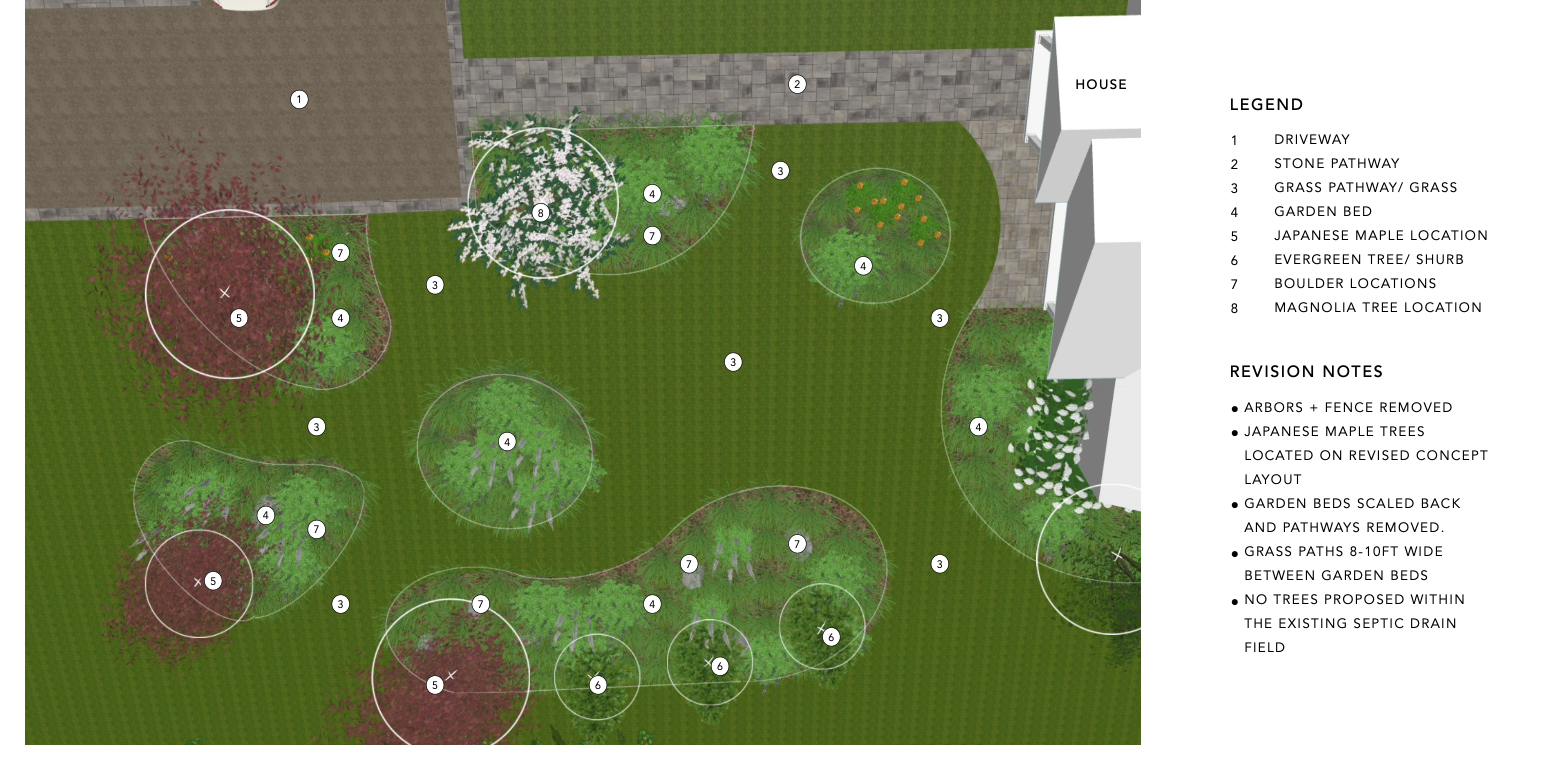
The scope includes a conceptual garden layout, plan view drawings, three dimensional perspectives, and a curated planting selection and palette that establish the long term vision for the site. Construction began in Q4 2025, with planting installation planned for late spring to summer 2026.
Garden beds have been installed using a no-dig, lasagna gardening approach. Organic materials are layered directly over existing ground, allowing soil to build naturally from the top down while protecting its structure and existing life.
For clients, this approach matters because it creates healthier soil with less disturbance. It supports stronger root systems, improves moisture retention, reduces long term maintenance, and helps the garden establish more quickly and reliably over time. The result is a resilient planting system designed to improve with age rather than require constant correction.
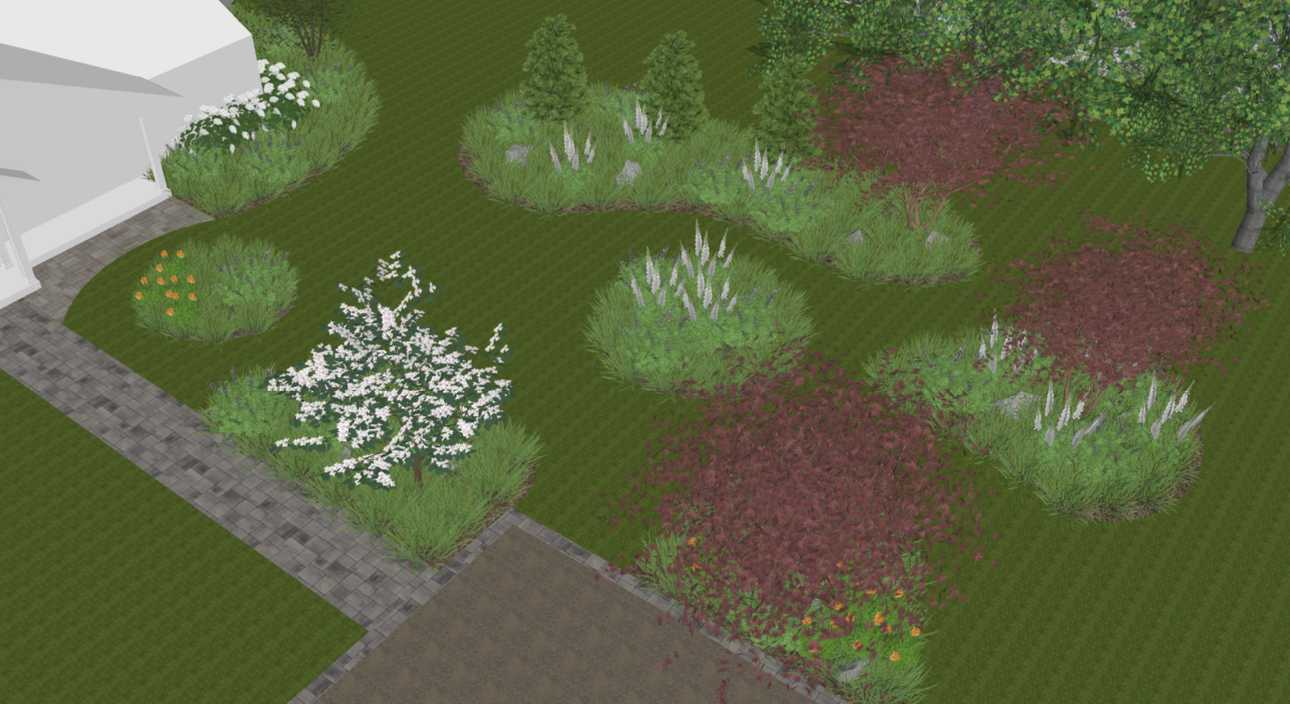
Overhead perspective showing the final garden layout, View 1
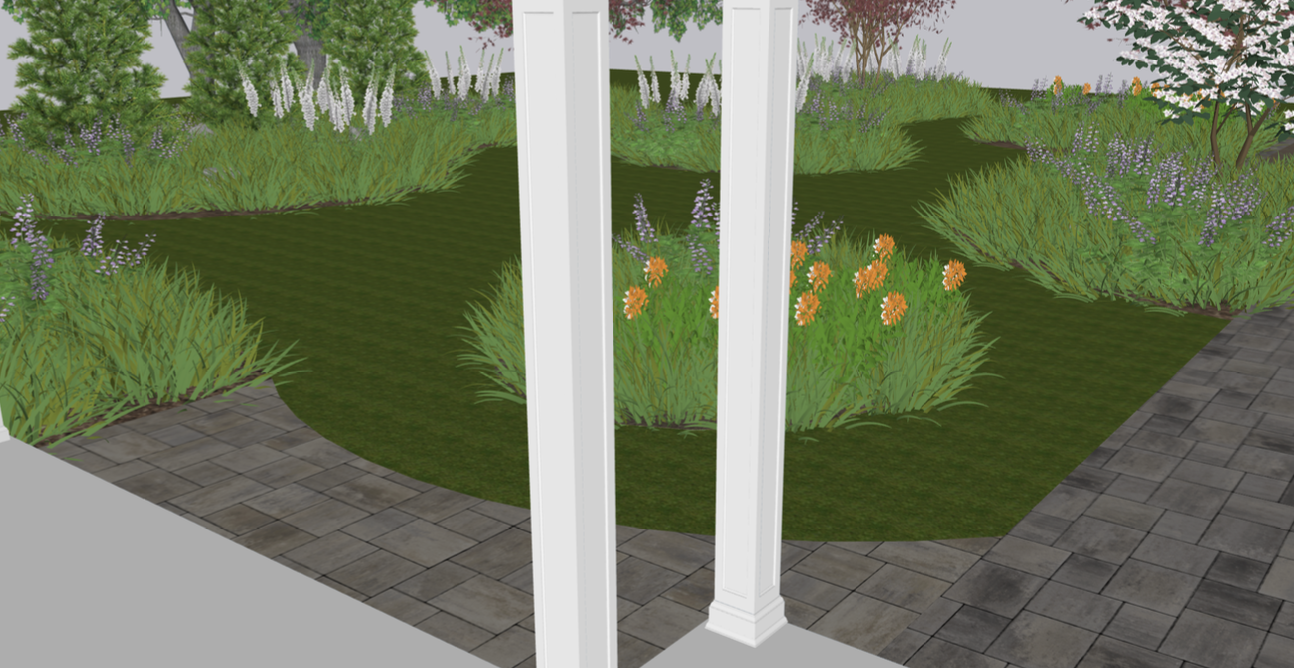
Perspective showing the final garden layout from the front porch, highlighting garden structure and planting relationships, View 2.
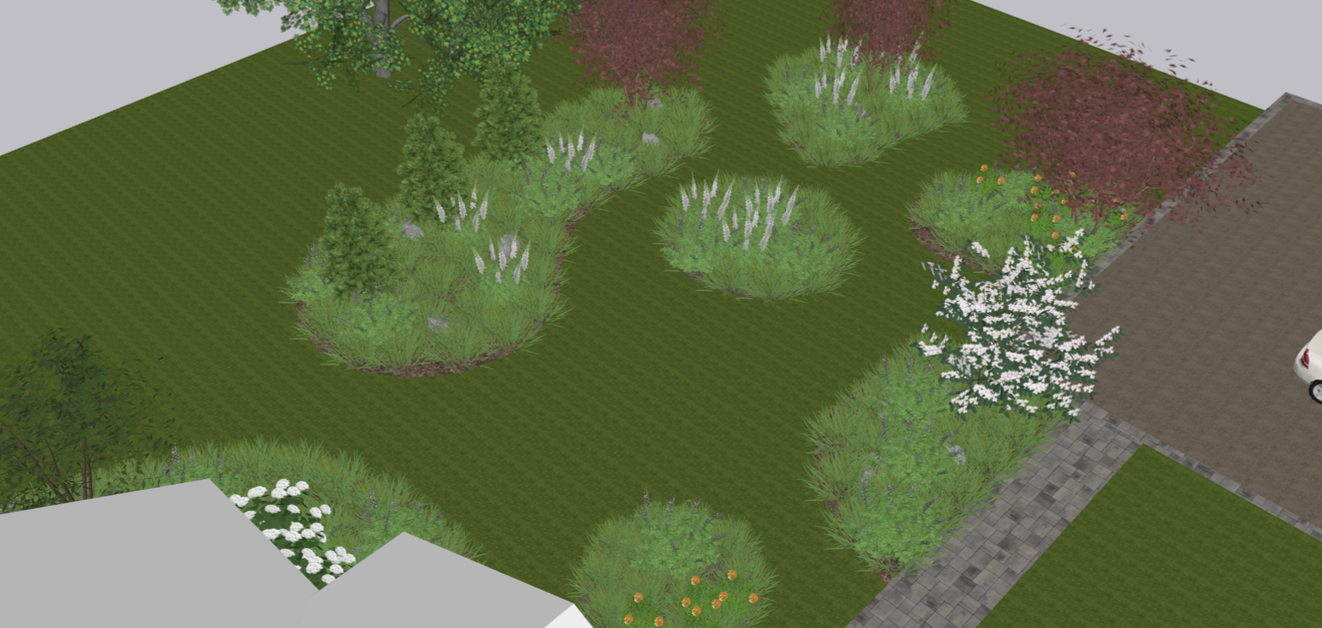
Overhead perspective showing the final garden layout, View 3.
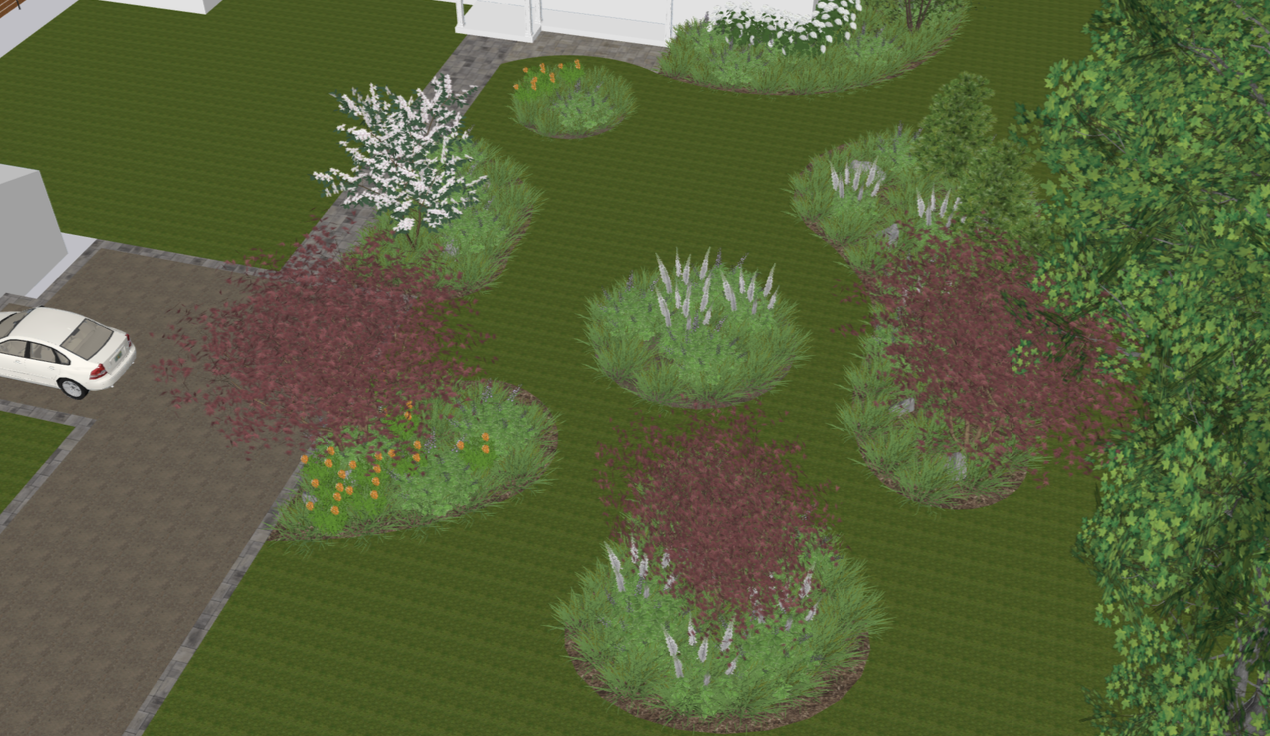
Overhead perspective showing the final garden layout, View 4
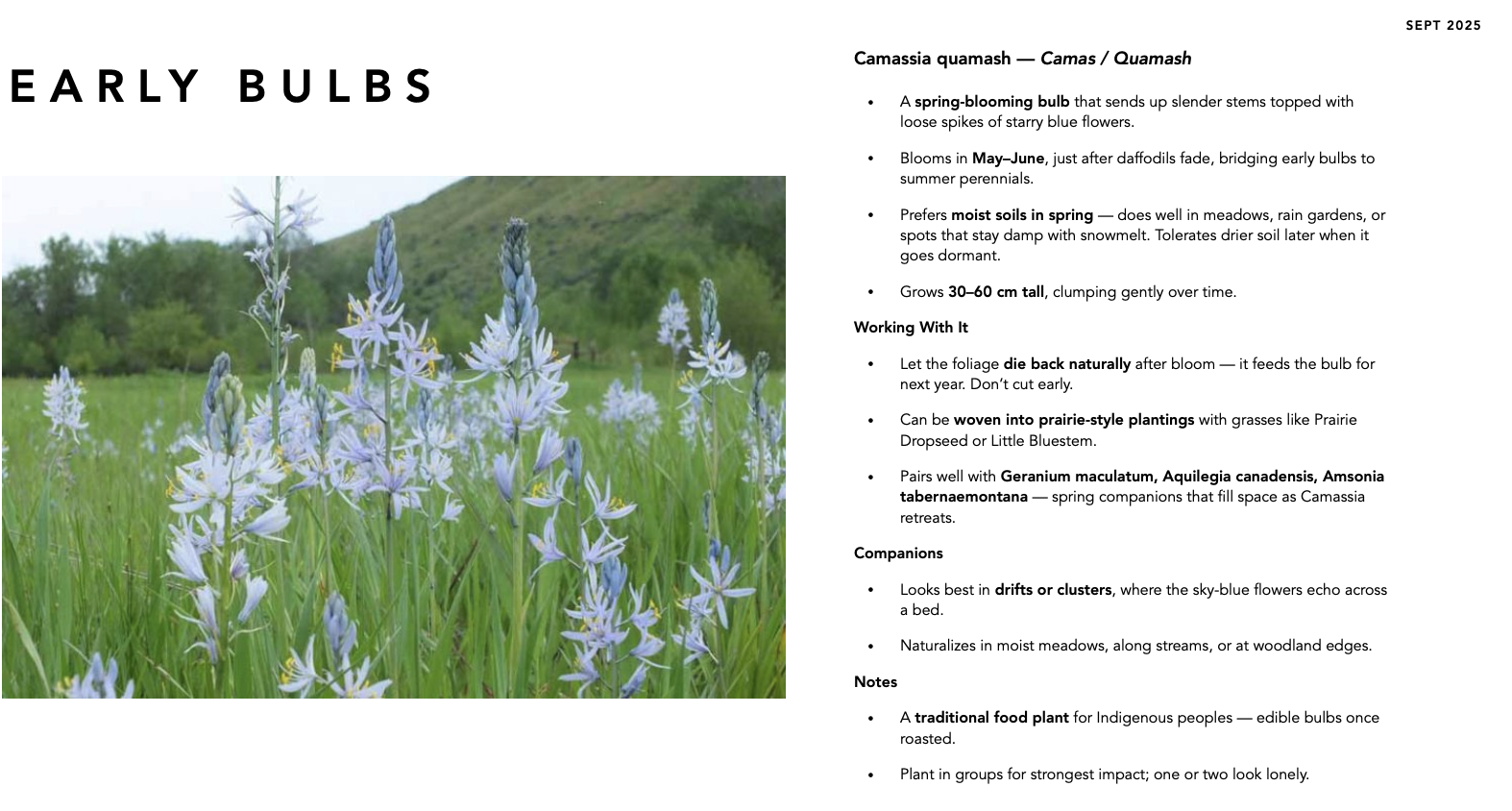
Camassia quamash selected as a spring flowering bulb for early colour, seasonal rhythm, and naturalized planting
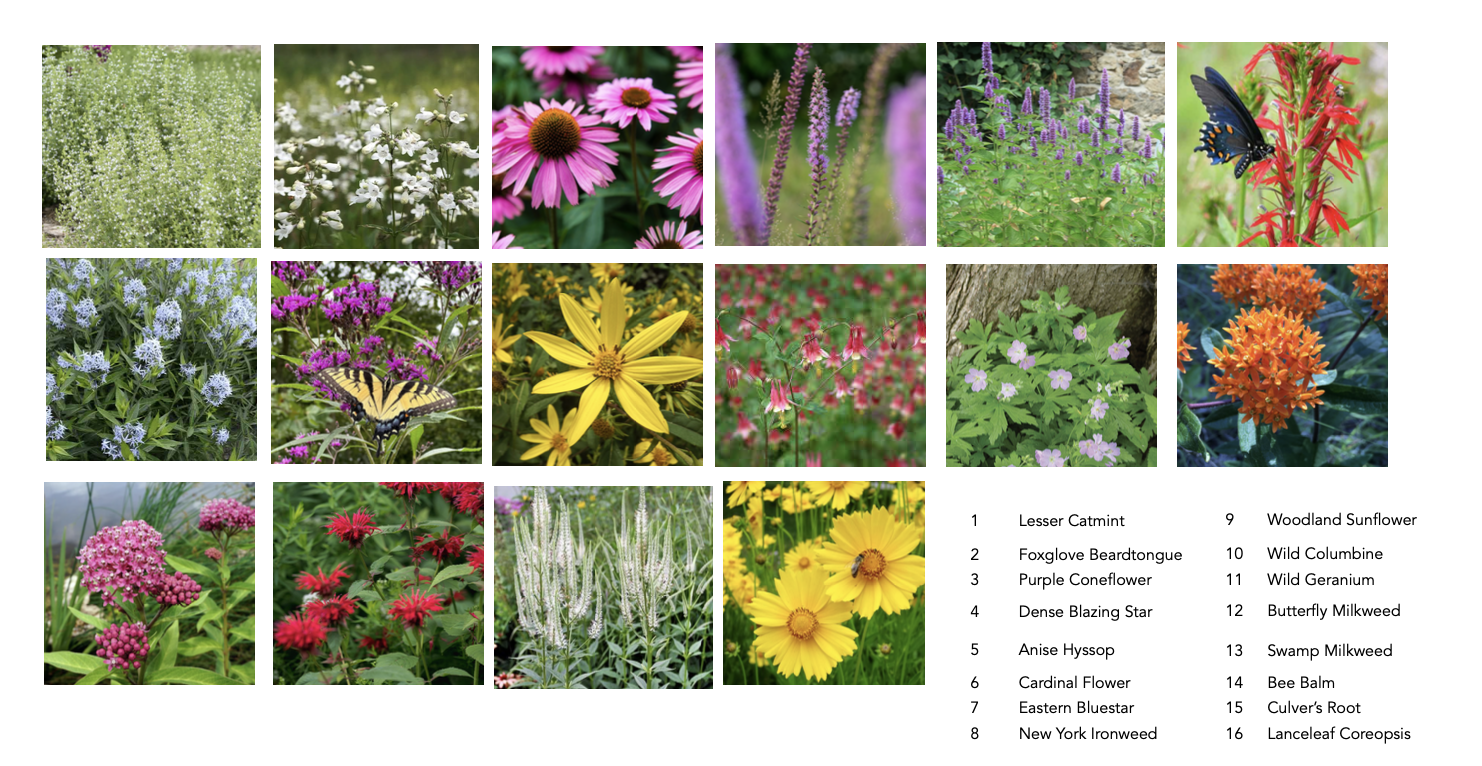
A curated selection of perennials chosen for ecological fit, seasonal rhythm, and long term resilience.
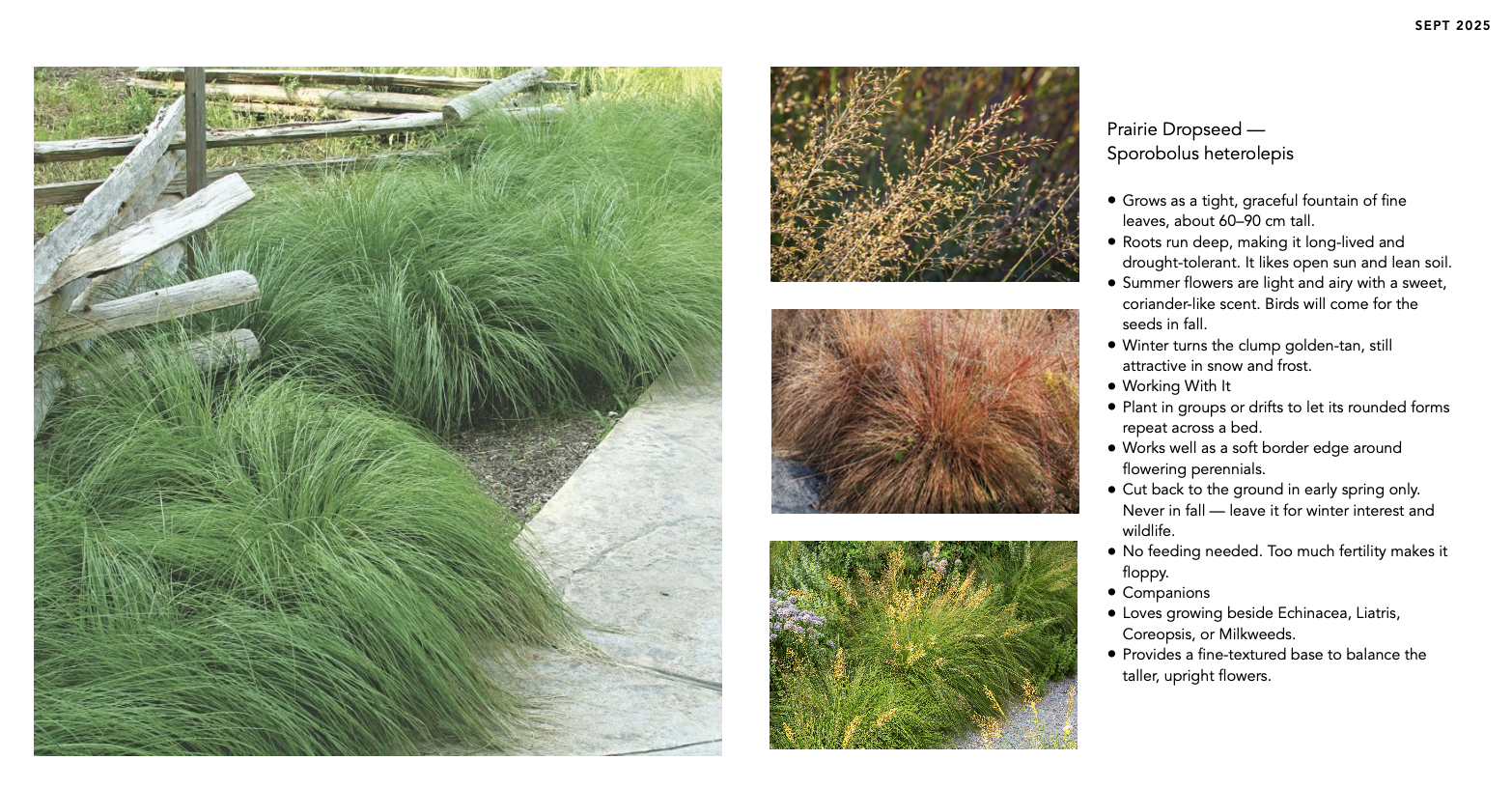
Prairie Dropseed selected as a resilient infill grass, serving as a living mulch to protect soil, suppress weeds, and bring visual cohesion to the planting.
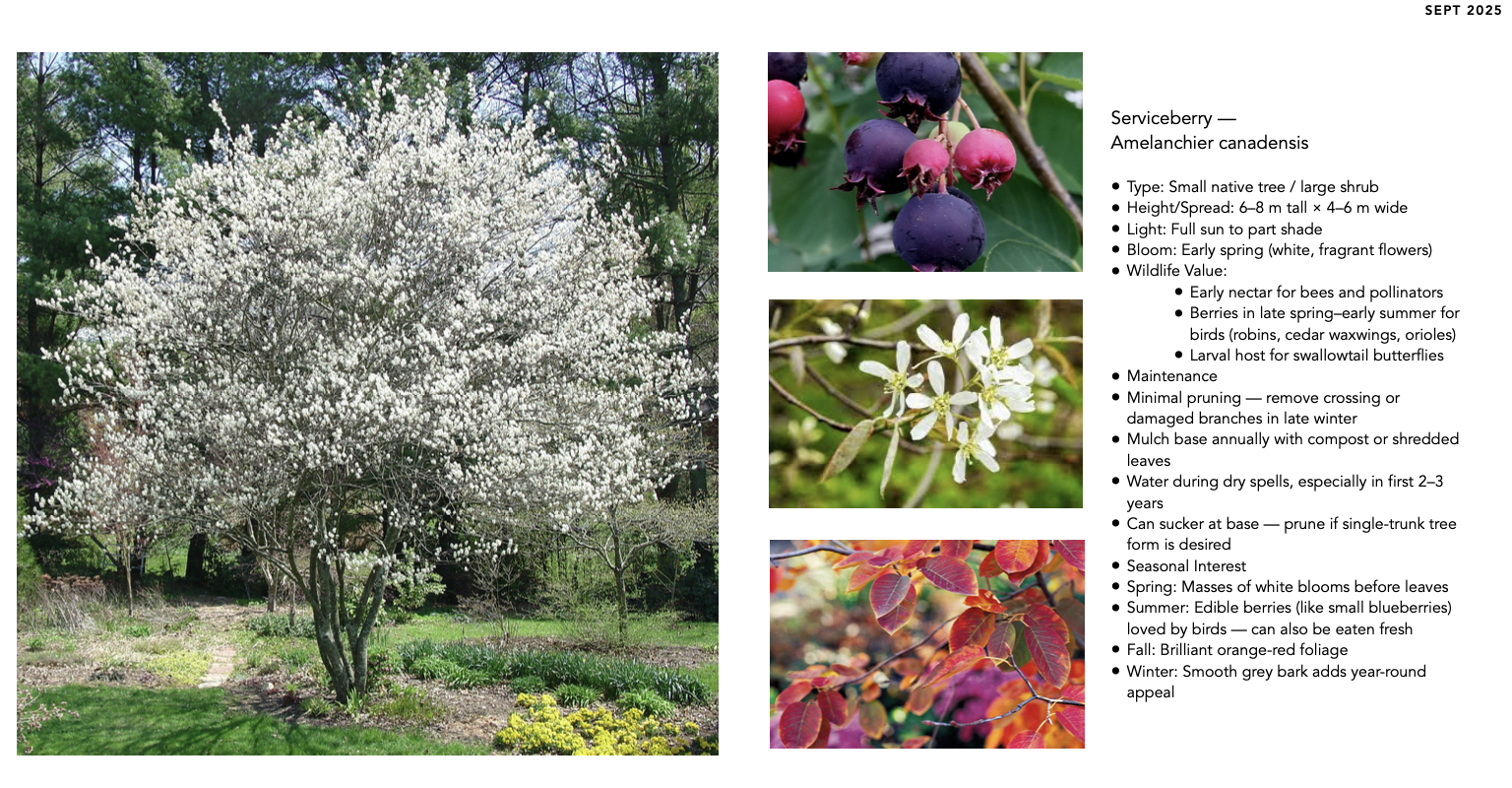
Serviceberry chosen as a native tree for spring flowers, edible fruit, wildlife value, and gentle canopy structure.
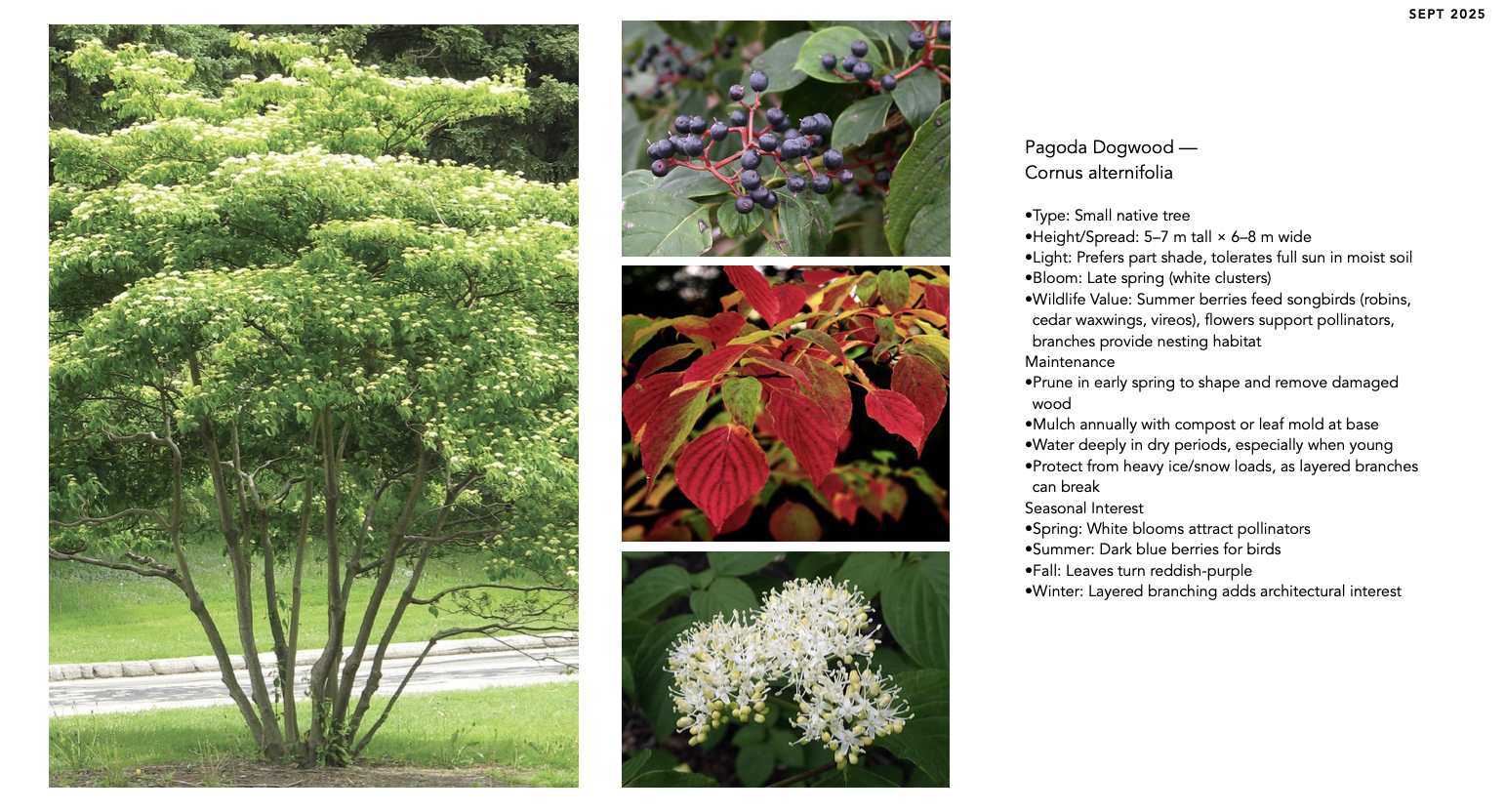
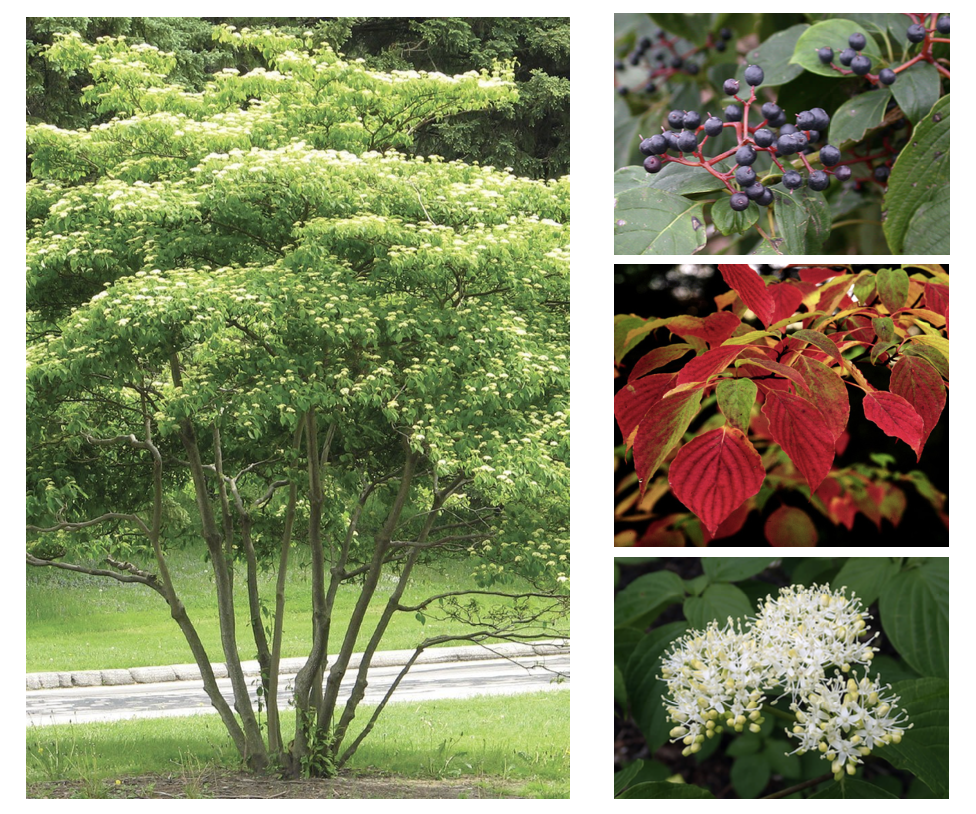
Pagoda Dogwood chosen as a native understory tree, valued for its tiered branching, spring flowers, and wildlife support.